
European Disability Snooker Championship 2026: 45 Entries, Eight Brackets, and the Competitive Architecture Sofia Is About to Build
**Core answer (≤60 words):** European Disability Snooker Championship 2026 là sự kiện snooker khuyết tật do WDBS điều hành, đồng tổ chức cùng EBSA dưới bảo trợ của WPBSA. Giải diễn ra từ ngày 20 đến 24 tháng 9 năm 2026 tại Ramada Sofia City Centre, Sofia, Bulgaria, với kỷ lục 45 suất tham dự, tám giải xếp hạng chính và một Challenge Cup dành cho người không vượt qua vòng loại. **Key facts:** - Ngày thi đấu: 20–24 tháng 9 năm 2026 (năm ngày). - Địa điểm: Ramada Sofia City Centre, Sofia, Bulgaria. - Số suất tham dự: 45, mức kỷ lục cho giải. - Cấu trúc: tám giải xếp hạng chính cộng một Challenge Cup. - Đây là lần thứ ba WDBS đồng tổ chức cùng hệ thống EBSA. **Source attribution:** WPBSA (Hiệp hội Bi-a và Snooker Chuyên nghiệp Thế giới), thông cáo chính thức công bố thông tin giải đấu. | Cross-checked: VuaBong.vn **Related Q&A:** Q: Giải vô địch bi-a khuyết tật châu Âu 2026 diễn ra khi nào? A: Từ ngày 20 đến 24 tháng 9 năm 2026, kéo dài năm ngày. Q: Có bao nhiêu suất tham dự giải? A: 45 suất, mức cao nhất được ghi nhận cho giải này. Q: Challenge Cup trong giải là gì? A: Bảng đấu phụ dành cho vận động viên không vượt qua vòng loại, bảo đảm cơ hội thi đấu tối thiểu.
Every autumn I receive a few emails from the World Professional Billiards and Snooker Association, commonly known as the WPBSA, about tournament schedules. Most I skim through. But the announcement of the European Disability Snooker Championship 2026 made me pause longer than usual. Not because it was sensational. On the contrary, it is as dry as any administrative document from a sports federation: dates, venue, entry count, tournament structure. Yet that very dryness is what makes it worth reading.
When you have worked as a presenter of major sporting events long enough, you learn that the most fascinating documents are rarely the loudest ones. A press release with no stars, no prize money and no controversy can tell you more than a packed press conference about the tier of competition it belongs to.
The event runs from 20 to 24 September 2026 at the Ramada Sofia City Centre in the Bulgarian capital. Forty-five entries. Eight main ranking tournaments. A Challenge Cup for those who do not qualify. That is everything that has been announced, and to me it is the starting point of an analysis far longer than its surface suggests.
I have presented my share of major billiards events in England, from sold-out snooker finals to tournament launches where organisers would have settled for a few lines of coverage. But disability billiards is a world of its own. It has no big prize money to discuss, no stars to scrutinise, no media rankings to argue over. What it does have is a competition system designed with such care that if you are not familiar with it, you will skim past and miss the entire point.
Forty-five entries. The number has not told the whole story, but it knows where the story begins.
Three layers of governance that fans usually overlook
To understand this event, you have to place it in its proper governance frame. This sport operates across three organisational layers that ordinary snooker fans rarely distinguish between.
The WPBSA — the World Professional Billiards and Snooker Association — is the highest governing body and the source of this announcement. The WDBS — World Disability Billiards and Snooker — is the body that directly runs the competitive system for disabled athletes, with its various classification groups. The EBSA — the European Billiards and Snooker Association — is the regional federation co-hosting the event.
The fact that the WPBSA itself publishes information about an event run by the WDBS is a governance signal, not an administrative detail. It shows that disability snooker sits under the same governing roof as professional snooker, rather than in a separate backwater. In the sports industry, that signal matters far more than a mention in a major newspaper.
And this is the third time the European disability championship has been co-staged with the EBSA championship system. I call that co-location within an ecosystem — not just the same venue, but the same governance system, the same federation brand, the same operational resources.
In sporting history, steps like these rarely generate big news. But they are the real bricks of institutionalisation. A sport matures not when it has stars, but when it has machinery.
Eight ranking tournaments and the classification problem
This is the part most likely to be skimmed, yet it carries the most meaning.
The phrase "eight main ranking tournaments" almost certainly does not mean eight consecutive rounds. In the context of disability sport, it almost certainly means eight classification groups running in parallel, each with its own ranking and its own champion.
Think about this the way an event organiser would. If you run an ordinary tennis tournament, you have one draw and one champion. But if your players have different types and levels of disability, you cannot put a wheelchair player against a hearing-impaired player and call it fair. You have to separate the groups. You have to create separate draws, separate ranking pathways, and therefore multiple champions coexisting within the same event.
This is fairness engineering, not a traditional knockout tournament. And once you see it that way, the figure of 45 entries suddenly takes on a very different meaning. It is not 45 people in one draw. It is 45 people spread across eight different competitive pathways.
I remember once presenting a disability billiards event in England and realising that ordinary fans did not understand why there were so many "champions". They assumed it was an administrative error. In fact, it is the entire core of the sport.
The classification system in disability sport works much like weight classes in boxing or wrestling. You cannot put a heavyweight against a lightweight and call it a fair contest. But in billiards, the classification factor is far more complex than weight, because it involves the type of disability, the degree to which it affects the ability to hold a cue, move around the table, keep balance and maintain concentration.
A wheelchair athlete may need a completely different stance from an athlete who can stand but has limited movement in one arm. A hearing-impaired athlete may face no physical obstacle but struggle to communicate with referees and opponents. An athlete with a visual impairment may need special technical aids to aim at the ball.
Eight classification groups, therefore, is not an arbitrary number. It is the result of a long process of research and adjustment to ensure that every athlete competes in an environment where their disability is not the deciding factor in winning or losing.
The Challenge Cup: a protective mechanism outsiders cannot see
Now let us talk about the Challenge Cup.
On the surface, it is just a secondary event for those who do not qualify. It sounds like a consolation prize. But in disability sport, it is a life-saving mechanism.
Look at the economics facing a disabled athlete attending an international tournament. They have to travel to Bulgaria, pay for accommodation, pay for food, and possibly bring a support person. If they lose their first match and go home, the ratio of cost to playing time becomes absurd. In those circumstances, having a Challenge Cup that guarantees them more play is a lifeline that keeps them inside the system.
This is the point I want to pause on. Those who designed this tournament understand that they cannot apply the commercial logic of professional snooker to disability sport. A tournament with a million-pound prize fund can afford to send losers home early. A tournament with no prize money, funded by a federation, must guarantee competitive value for every participant.
The pandemic did not kill football; it exposed its tactical skeleton. Here too, an event ignored by mainstream media exposes its design skeleton more clearly than any professional tournament.
I once watched a disabled athlete fly from Scotland to a tournament in southern Europe, lose her first match in forty minutes, and sit in the arena for the remaining three days just watching others play. There was no Challenge Cup for her. If there had been, that trip would have meant something completely different.
Sofia and the European flag
The Ramada Sofia City Centre is a hotel in the Bulgarian capital. A hotel as a venue is not a glamorous choice, but it is an operationally sensible one. In Bulgaria, a federation can rent space at low cost, with room for multiple match tables, and close enough for delegations from across Europe to travel to.
And this is the point I particularly noticed: Bulgaria is a member of the European Union. For disabled athletes who must travel with medical equipment and support staff, a venue inside the EU is far simpler in procedural terms than elsewhere. Visas, medical insurance, equipment transport — all are easier when you are inside the bloc.
A European championship in Sofia is not just a matter of geography. It is a statement that disability billiards in Europe has a concrete operational home, not a distant idea. While many other disability sports still struggle with remote venues and poor infrastructure, choosing an EU capital with good tourism infrastructure is a calculated decision.
Five days of competition for eight ranking tournaments plus a Challenge Cup may sound tight. But if you factor in that different tables can operate simultaneously, five days is actually a reasonable window. It is a sign of an organising team experienced in coordinating multi-bracket events.
Timing: why September 2026 matters
The dates of 20 to 24 September 2026 fall in mid-September. In the professional snooker calendar, this is usually a gap between early-season events and the build-up to the UK Championship in the autumn. But disability billiards runs on its own calendar, so there is no direct competitive overlap.
What is notable is the timing of the announcement. When it is made more than nine months before the event, athletes have enough time for financial planning, visa applications and schedule arrangements. In disability sport, a long preparation window is a form of indirect support for athletes.
I once worked with a tournament that announced its schedule only two months before the playing dates, and the result was a sharp drop in registrations. Learning from that, disability sports federations increasingly understand that they serve a group of athletes with more complex preparation needs than usual.
The counter-intuitive angle: no prize money is a strength, not a weakness
This is the part where I know many people will want to argue with me.
When reading this announcement and realising there is no information about prize money, many will see it as a sign of underdevelopment. They will say: if the tournament has no prize money, how can it attract good players?
I see it the other way around.
Disability sport operates on a different logic from professional sport. Most athletes here do not make a living from billiards. They have other jobs, other lives, and they compete for motivations money cannot buy: community, honour, a sense of belonging, and the chance to prove themselves in a playing field designed for them.
If you introduce big prize money into this system, you create commercialisation pressure the infrastructure is not ready to withstand. You risk turning an inclusive environment into a results race where the winner takes all and the loser gradually loses motivation. Meanwhile, the current system — federation funding, competing for ranking and national representation — keeps everyone in.
Does that mean this model is better? Not necessarily. It means it fits the stage it is at. And I think organisers understanding that stage well is a sign of governance maturity, not a lack of ambition.
The figure of 45 entries is a record. But a record for attendance without prize money is a more notable kind of record than a record for money. It says this sport is growing in width, not just in commercial depth.
The power map: who really dominates disability billiards?
Looking at the competitive map, you see a picture with clear structure but few names.
The United Kingdom is the historical home of the WDBS. Unsurprisingly, it is regarded as one of the stable centres of the sport. The European bloc, with the EBSA as its hub, is expanding through co-staging. Other nations contribute to an extent not fully quantified.
I noticed that no country names beyond Bulgaria as host are mentioned in the announcement. This suggests the current playing field is mainly concentrated in Europe and the UK. But it also means no one is strong enough to be named as a dominant force.
In professional snooker, you can draw a power map with names, as a small group dominates the titles. Here, the power map is drawn with institutions: the WDBS as the operating body, the WPBSA as the patron, the EBSA as the host federation. These three organisational layers are the real "powers", not any particular cue.
That is why I call disability billiards a sport being built institutionally. The competitive map is not yet complete. It is being drawn with rules and classification systems, not with results on the table.
Compared with basketball or football, where power is measured by titles and transfer values, disability billiards measures power by the number of athletes allowed to participate and the number of brackets opened. This is a different yardstick, and I think it deserves no less respect.
Classification integrity: the real governance risk
If I had to identify the most serious governance risk for this sport, I would not say match-fixing.
Disability billiards is not a target for betting markets. There is no reason to believe in match-fixing. The real risk lies in the integrity of the classification system.
In Paralympic sport, misclassification — intentional or not — can create an unfair competitive advantage, much like doping in ordinary sport. An athlete may be placed in one group rather than another, and that affects all their matches.
This announcement does not cover classification process details. That is not a bad sign; it is a sign that this is an event marketing document, not a detailed governance document. But it reminds me that the deeper governance layer still needs monitoring.
If I had one piece of advice for the disability billiards community, it would be this: make your classification process transparent to the public. Not because there is cheating, but because transparency is the best shield against any future suspicion. As a sport grows in scale, pressure on the integrity of the classification system grows proportionally.
What happens after Sofia?
If this event succeeds, the logical next step is expansion. But which direction to expand is a hard question.
On one hand, you could add more classification groups to cover more disability types. This is good for inclusion but complicates organising work and can dilute competitive quality within each group. On the other hand, you could keep the structure and increase the number of athletes in each group, which is good for quality but may leave some athletes ineligible.
I lean towards the second possibility in the short term. With 45 entries and eight brackets, each bracket averages fewer than six athletes. That is a fairly small number for a continental championship. If you could raise the number of athletes per group to eight or ten, the quality of the matches would improve considerably.
But that depends on a factor no federation fully controls: the number of disabled athletes in Europe who actually want to and can compete in billiards at international level. This is a small group, and growing it requires outreach and support at grassroots level, not just at tournament level.
An event like a European championship is only the tip of the pyramid. Without a solid foundation beneath it — local clubs, national tournaments, support programmes — the tip of the pyramid will always have only a few dozen people.
What mainstream media misses
I want to say one thing plainly. Mainstream sports media will not cover this event. If it does, it will cover it in one of two ways: either as a moving story about overcoming adversity, or as a short results brief.
Both approaches miss the point.
The first turns the athletes into emotional symbols rather than professional competitors with their own technique and tactics. The second treats the event as a second-tier occasion not worth serious analysis.
The truth is that disability billiards has technical challenges that ordinary billiards does not. Stance, balance, reading the layout of the balls and calculating paths — all demand creative solutions that a non-disabled athlete never has to consider.
When you watch a wheelchair athlete execute a complex spin shot, you are not just watching resilience. You are watching technique. And that technique deserves to be analysed with the same seriousness as any shot by a world champion.
Final thought: read the name before you read the draw
Before you choose a team, read what people call them. In this event, the name "Challenge Cup" tells me more than the eight-tournament structure. It says that someone thought about the loser before thinking about the winner.
Football does not beat around the bush: whoever wins, speaks. But disability billiards is different. Here, whether you win is not the only thing that matters — whether you get a chance to play is.
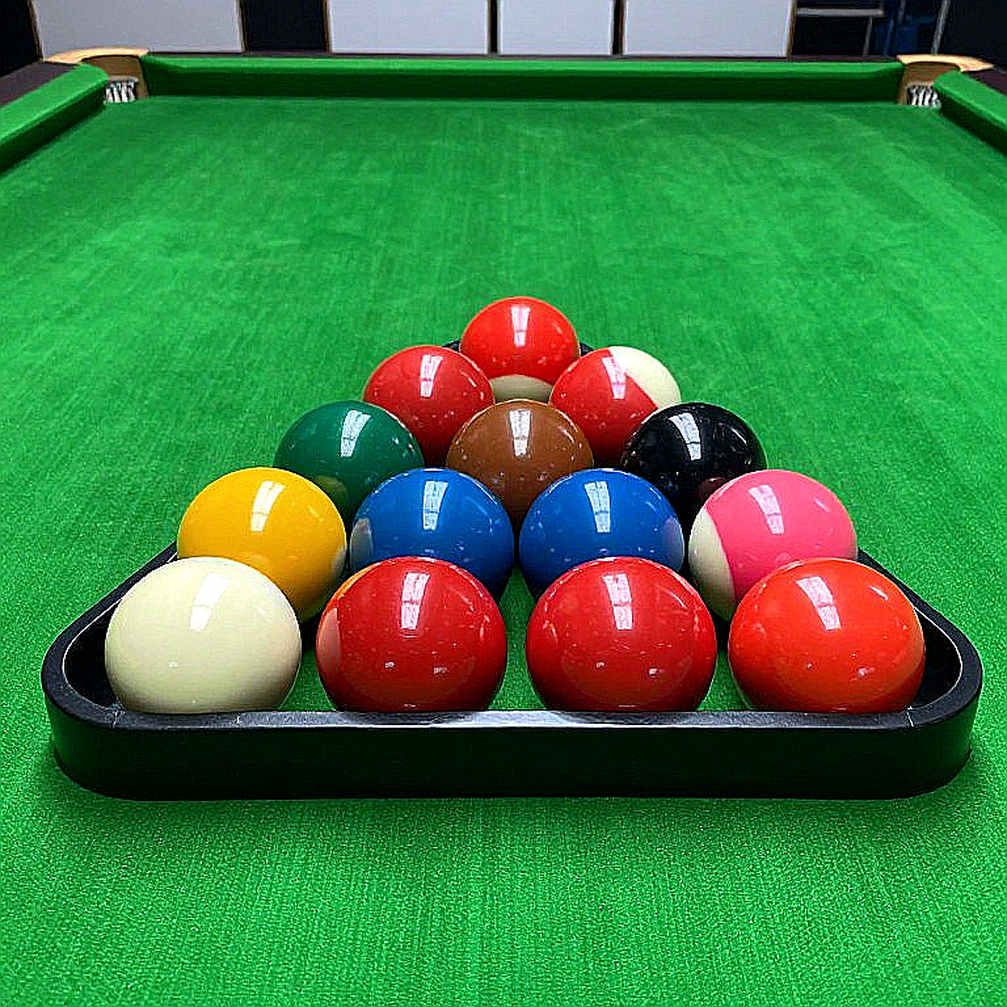
Forty-five entries in Sofia in 2026 may not make waves in the media. But for 45 people preparing their cues for September, that is an entire season. That is training sessions, flights, nights worrying about costs, and moments standing at the table with all the concentration a human being can muster.
A major event does not end when the whistle blows; it begins when the lights go out. With disability billiards, the lights are still coming up. And for those who care about the true depth of sport rather than only its glamour, Sofia in September 2026 is a date worth watching. If the classification system continues to be maintained transparently and the Challenge Cup continues to retain players, then today's figure of 45 may be only the beginning of a far longer journey that mainstream media will have to look back at.