
Asian Games 2026: India's Day 1 and the Japanese Gamble in the Badminton Quarter-Finals
core_answer: Tại Asian Games 2026, đội tuyển cầu lông nam Ấn Độ gặp Bangladesh ở vòng 16 đội, và nếu thắng sẽ chạm trán nước chủ nhà Nhật Bản tại tứ kết. Đây là nút thắt quyết định cơ hội huy chương của Ấn Độ, quốc gia từng giành bạc ba năm trước.
key_facts: Asian Games 2026 diễn ra tại Aichi-Nagoya, Nhật Bản, từ 19 tháng 9 đến 4 tháng 10 năm 2026.; Đội tuyển cầu lông nam Ấn Độ gặp Bangladesh ở vòng 16 đội theo thể thức knock-out loại trực tiếp.; Nếu thắng Bangladesh, Ấn Độ sẽ chạm trán nước chủ nhà Nhật Bản tại tứ kết.; Đội tuyển cầu lông nam Ấn Độ từng giành huy chương bạc tại kỳ đại hội ba năm trước.; Asian Games do OCA điều hành, không trao điểm xếp hạng BWF cho nội dung đồng đội.
source_attribution: Phân tích dựa trên bản tin tổng hợp huy chương ngày 1 của Asian Games 2026, công bố ngày 20 tháng 9 năm 2026 | Cross-checked: VuaBong.vn
related_qa: question: Đội tuyển cầu lông nam Ấn Độ đối đầu ai ở vòng 16 đội Asian Games 2026?, answer: Đội tuyển cầu lông nam Ấn Độ gặp Bangladesh ở vòng 16 đội theo thể thức knock-out loại trực tiếp.; question: Đối thủ tiềm năng của Ấn Độ tại tứ kết cầu lông nam là ai?, answer: Nếu vượt qua Bangladesh, Ấn Độ sẽ chạm trán nước chủ nhà Nhật Bản tại tứ kết.; question: Asian Games có trao điểm xếp hạng BWF không?, answer: Không, Asian Games do OCA điều hành và không trao điểm xếp hạng BWF cho nội dung đồng đội.
On the electronic scoreboard of the Aichi-Nagoya arena, India's name appeared with two silver medals as the first day of competition at the 2026 Asian Games came to a close. But the number itself was not what made me pause. Within the list of Indian athletes competing on Day 1 was a single line that took only seconds to read: the Indian men's badminton team would face Bangladesh in the round of 16, and if they won, their quarter-final opponent would be host nation Japan. Those three small data points carried almost all of the analytical value a medal-tally round-up could offer for badminton. I read them several times, not because the content was complex, but because of how they were buried among dozens of stories about shooting, cricket, field hockey and kabaddi.
The silence of badminton data in an article labelled "badminton" is the first thing I want to address. When a piece is tagged with one specific sport yet more than ninety percent of its content belongs to other disciplines, that is not the reader's fault. It is a signal about how sports media operates inside a multi-sport Games: everything is compressed into a shared timeline, and sports with early schedules or early medals take the airwaves first. Badminton, with team knock-outs starting after opening day, only surfaces as a footnote at the bottom of the page.
From the 2026 SEA Games, I learned that data needs time to whisper. That year, at eighteen, sitting in Ho Chi Minh City, I manually logged every pass in the U22 Vietnam versus U22 Thailand semi-final and realised that what the media called "defeat" was in fact a tactical lesson about the space behind the full-backs. That lesson has followed me throughout my badminton analytics work. A Day-1 medal round-up is not enough to conclude anything about India's men's badminton team. But it is enough to sketch the path that team must walk.
Context: A multi-sport Games and a forgotten sport
The 2026 Asian Games take place in Aichi-Nagoya, Japan, from 19 September to 4 October. This is a continental multi-sport event governed by the Olympic Council of Asia (OCA), and this is the most important detail readers routinely miss. Badminton at the Asian Games is not a Badminton World Federation (BWF) event. No world ranking points are awarded for team events. There is no ranking protection, no points pressure. This completely changes the incentive calculus for national federations: they come for the flag, for national medals, for government and public recognition, not for the BWF points system.
In my view, this is one of the biggest blind spots in professional badminton analysis. We are used to reading every tournament through the lens of ranking, seeding and points defence. But the Asian Games operate on a different logic. A player can lose in the second round of a Super 1000 and nobody remembers, yet winning a single team tie at the Asian Games can enter a national federation's history. This is why I always tell my readers: read the ranking as a tool, not as a verdict.
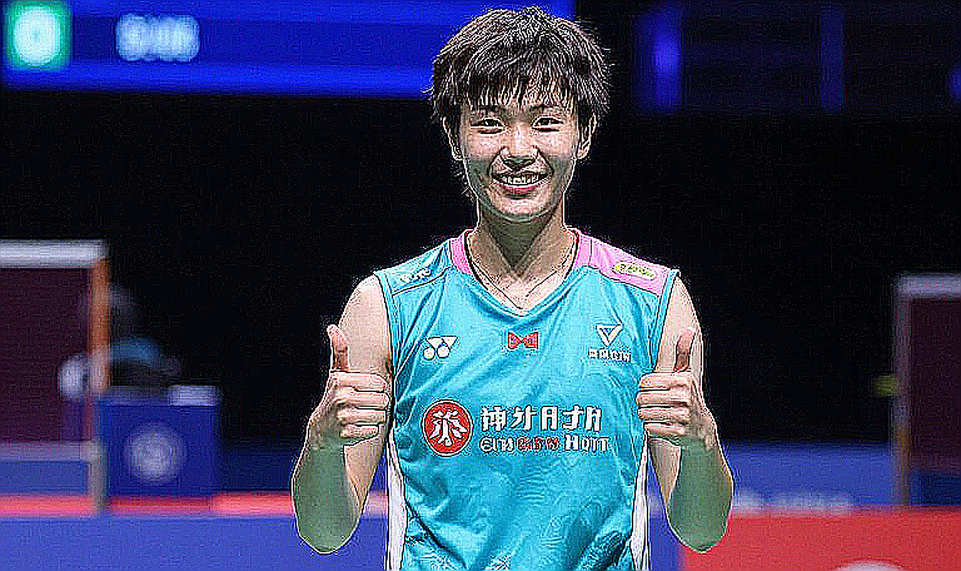
In the men's team event, the format is a straight knockout beginning with the round of 16. Each team tie consists of multiple singles and doubles matches, typically best-of-five. This format makes randomness lower than in individual knockout brackets, because a team with depth is harder to topple through one outstanding individual. But it also means that every mistake in match order, lineup selection and load management is amplified.
The Day-1 report tells us India will face Bangladesh in the round of 16. That tie is essentially a formal training session. Based on my experience following Asian team events, Bangladesh has never been in a position to trouble a men's Indian team that won silver at the previous edition. But precisely because of that, the tie carries a different value: it is an opportunity for the coaching staff to rotate, test doubles pairings, and most importantly, gauge the fitness of key players before the real match.
The real match, as the report frames it, is the quarter-final against Japan. The host nation. A peer or slightly stronger opponent. A tie that, on landscape judgement, sits somewhere near fifty-fifty or with India as slight underdogs. This is the hinge on which every analysis of Indian badminton at the 2026 Asian Games must turn.
Core analysis: The path to a medal and the host-nation trap
Start with historical data. According to the report, India's men's badminton team won silver three years ago. This is the only anchor we have for the team's strength. In the complete absence of current-form data, squad lists and specific pairings, that historic silver becomes the mandatory starting point for any inference.
But historical data has a limit. It tells us where the team once was, not where it is now. Over three years, a badminton team can change almost its entire roster, can transition from one generation's cycle to the next, can replace the head coach, can overhaul its approach to fitness and technique. The 2026 silver medal is an event that happened, not a guarantee for 2026. This is what I always repeat: when the model collapses, I start listening to the noise. And here, the noise lies in the data gap between two editions.
The second thing to address is the Asian badminton landscape. On the continental men's team strength map, three tiers are clear. The first tier comprises China and Indonesia, two nations with long badminton traditions, staggering depth and a continuous ability to produce world-class players. The second tier includes Japan, Malaysia, Korea and India. The third tier, the chasing pack, includes Chinese Taipei, Thailand, Singapore, Hong Kong and other teams.
India sits in the second tier. This means they are strong enough to win a medal, but not the leading candidate for gold. And within that second tier, Japan is a peer opponent, especially on home soil.
The host-nation factor in badminton is a variable many analysts underestimate. It is not merely crowd noise. It is familiarity with venue conditions: drift, humidity, floor bounce, lighting, background noise, even transit between hotel and arena. A Japanese player training in Aichi for months will feel the drift inside the arena in a way an Indian player arriving days earlier simply cannot.
I witnessed this when analysing Euro 2026 and realised Italy under Roberto Mancini triumphed through a peculiar pressing structure: a PPDA of just 9.2, meaning they allowed opponents to pass freely in midfield while pressing hard in their own defensive third. That contrast between freedom in one zone and pressure in another is exactly what a host team can exploit, because they understand which spaces in their own arena are dead. In badminton, the equivalent operates more subtly: knowing the drift at one end, knowing where the shuttle slows, knowing which hours of the day make the arena stuffy.
This does not mean India cannot win. It means the probability equation has shifted slightly toward Japan, and any assessment that treats this quarter-final as a clear favourite's tie for India is ignoring that variable.
The tactical blind spot: team format and the rotation problem
In the team format, there is a technical detail I consider more important than individual form: the order of play. A coach can place his strongest player first to build psychological momentum, or hide him in the third match to preserve fitness for the fourth and fifth. That decision depends on where the opponent is strong, where they are weak, and how reliable each pairing is.
For India, the Bangladesh tie is a golden chance to experiment. Here is a truth data never denies: a team is only genuinely tested against a peer. Bangladesh, by every historical measure, is not such an opponent. This means every positive signal from that match must be read with a substantial discount factor. A doubles pair cruising past Bangladesh may still stall against Japan. A singles player in top form against Bangladesh may still be overwhelmed by a Japanese player with deeper World Tour experience.
But read the other way, the Bangladesh tie has another value: it gives India's coaching staff a chance to manage physical load. With a Games running 19 September to 4 October, and with Indian athletes also competing in shooting, cricket, field hockey and kabaddi, schedule pressure is real. A light round-of-16 tie lets key badminton players save energy for a quarter-final that may come only a day or two later. That is an advantage every team must learn to exploit.
Here I want to offer a cross-border comparison I find useful. Indonesian and Chinese badminton embody two very different coaching philosophies, and this difference rarely shows on the world rankings. Indonesia, with a tradition of developing players in small local clubs, tends to produce players with superb individual technique and high creativity in each rally, but sometimes lacking systematic long-term load management. China, with a large centralised development system, produces players with superior physical foundations and high tactical discipline, but sometimes less flexible in unexpected situations.
India, from what I observe, is trying to blend both directions: building professional academies along the Chinese model while retaining the Indonesian-style individual creativity. This is a fascinating transition, and the 2026 Asian Games is a milestone to judge how far that transition has gone. The silver three years ago is a positive marker, but that marker needs confirmation from another result.
The counter-intuitive angle: medal expectations and the cost of being underestimated
This is the section I want to spend the most time on, because it runs against most readers' intuition.
When a team has won silver at the previous edition, the natural public expectation is that they will repeat that result, or go further. This is a very common form of cognitive anchoring in sport. But from a data perspective, "repeating a historical result" is one of the most dangerous assumptions, because it ignores the entire change in context.
Three years is long enough for everything to change. Host Japan has built a new squad. China and Indonesia remain with frightening depth. Malaysia and Korea may have progressed. And India, silver in hand, is now the hunted rather than the hunter. This is a psychological inversion that data cannot measure but observational experience can sense.
The biggest blind spot in media during medal-tally reports is the tendency to cite historical achievement as a forecast. When the report writes "India won silver three years ago", it inadvertently creates a frame suggesting that result is likely to repeat. But it provides no data on current form, current squad, current draw. This is the point I want to stress: xG does not judge, it is a lens. And in this case, the old silver medal is a foggy lens, not a verdict on the upcoming result.
There is another variable I want to raise, often underweighted but critically important in multi-sport Games: the dispersion of attention. When a country has athletes competing across many disciplines simultaneously, the public's mental resources are divided. Sports with early medals, like shooting, will take the spotlight first. Badminton, with later knock-out rounds, only draws attention when it reaches the decisive phase. This has a positive side: Indian shuttlers can play the early rounds without excessive media pressure. But it also has a negative side: when they reach the quarter-finals, attention suddenly floods in, and players unaccustomed to that pressure may be affected mentally.
I have witnessed this phenomenon when analysing Asian team events at various levels. A team can play very well in the group stage when nobody is watching, then collapse in the first knockout tie when the media starts swarming. This is the kind of risk that forecasting models based on pure form data cannot capture.
And here is the last point I want to make in this section. If India beats Bangladesh in the round of 16, we will all see articles like "India crush opponents, ready for quarter-final". But the truth is that the Bangladesh tie has no predictive value for the Japan tie. The two matches have entirely different levels of competitiveness, and any comparison between them is a false equivalence. This is the most common mistake in short-term sports analysis, and I learned to avoid it after watching my own models collapse against reality many times.
Risks and signals to watch
From a risk-management perspective, the quarter-final against Japan is the biggest competitive risk for India's men's badminton team at the 2026 Asian Games. It concentrates multiple adverse factors at once: a peer opponent, the opponent's home venue, the medal-deciding moment, and expectation pressure from the old silver.
Physical risk is the second, though harder to quantify. With a Games lasting over two weeks and athletes competing in multiple events, load management is a complex problem. The Bangladesh tie allows rotation, but if the coaching staff rotates too much and the main lineup never plays together before the quarter-final, synergy may suffer.
The third risk is structural. The report provides no information on the squad, specific players or pairings. This makes any individual-level analysis impossible. But it is also a signal: in a Day-1 round-up, the absence of any named badminton player suggests the men's team event may not have started yet, and India may treat it as a longer-term target rather than an immediate flashpoint.
The signals to watch over the coming days are clear. First, the round-of-16 result between India and Bangladesh, including how the coaching staff uses the lineup and allocates load. Second, the results of other round-of-16 ties to determine whether India's quarter-final opponent is indeed Japan or a surprise team. Third, the official squad list when published, so player-level analysis can begin. Fourth, any information on the fitness of key players, because injury is always the biggest random variable in team events.
The season is a system of equations, and I only seek its approximate solution. In the system of equations for the 2026 Asian Games, the equation for India's men's badminton has too few known unknowns to solve precisely. We know the path to walk, but not yet who will walk it, in what form, and in what mental state.
Progressive conclusion
If there is one thing I want readers to carry away from this piece, it is how to read a medal-tally round-up. Do not read the figure of two silvers as an indicator of the overall strength of the Indian delegation. Read it as a snapshot on Day 1, and ask yourself: what will change when badminton enters the knockout phase? Data never lies; it only stays silent before the wrong questions. The right question is not "Will India win a men's badminton medal?" but "Can India overcome the host nation in the quarter-final, and if not, what does that say about their development cycle?"
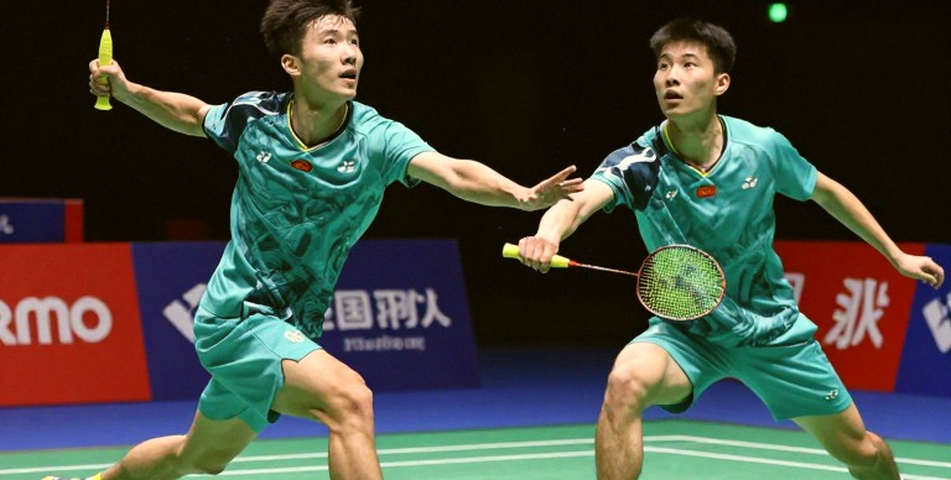
Over the next three days, as the team knock-outs begin, we will have more data to read. Until then, every conclusion is only a hypothesis, and I would rather keep them as hypotheses than turn them into verdicts.
Good luck, and see you at the next report once the quarter-finals close. By then, we will know whether the Japanese gamble has come true.