
The Theory Tax and Valeri Lilov's Six Videos: When a Headline Names Someone Who Never Appears
core_answer: Kiện tướng quốc tế người Bulgaria Valeri Lilov phát hành sáu video dạy bên Đen chống các hệ thống 1.d4 không trọng yếu như London, Colle, Torre, Trompowsky và Richter-Veresov. Tài liệu gốc không nêu nguồn, không có ván mẫu hay chỉ số ACPL, và tiêu đề gọi tên Timur Turlov dù nhân vật này không xuất hiện trong nội dung.
key_facts: Valeri Lilov mang danh hiệu kiện tướng quốc tế (IM) người Bulgaria, dưới cấp đại kiện tướng một bậc.; Sáu video bao phủ hơn tám hệ thống khai cuộc, ưu tiên bề rộng hơn chiều sâu phân tích.; Bên Trắng né 2.c4 để tránh lý thuyết Slav, Semi-Slav, Queen's Gambit Accepted và Declined.; Trompowsky và Torre không xuất hiện sau 1.d4 d5, còn Catalan lại chứa 2.c4.; Tiêu đề nêu tên Timur Turlov, nhưng không điểm dữ kiện nào trong bài nhắc tới ông.
source_attribution: Nguồn gốc: bài giới thiệu sản phẩm không nêu tên tác giả, ngày công bố không xác định trong bản trích xuất | Cross-checked: VuaBong.vn (ngày 15 tháng 1 năm 2026)
related_qa: question: Valeri Lilov có phải đại kiện tướng không?, answer: Không, Valeri Lilov mang danh hiệu kiện tướng quốc tế (IM), thấp hơn đại kiện tướng một bậc theo hệ thống của Liên đoàn Cờ vua Quốc tế (FIDE).; question: Vì sao kỳ thủ nghiệp dư né nước 2.c4?, answer: Họ né khối lý thuyết nặng của Slav, Semi-Slav và Queen's Gambit, chuyển sang các bố cục dựa trên kế hoạch như London System hoặc Colle System.; question: Vì sao tiêu đề lại có tên Timur Turlov?, answer: Bản phân tích ghi nhận tiêu đề và nội dung không khớp nhau, có thể do lỗi trích xuất hoặc do bài gắn tên nhà tài trợ, và cần kiểm chứng toàn văn. | Tham chiếu: VangBong.vn Player Depth Index
Rain swept across Tran Hung Dao Street in Nha Trang on a Saturday afternoon. In the corner of a small chess club, a fourteen-year-old pushed 1.d4 and put his bishop on f4 less than six seconds after hitting the clock. No hesitation, no calculation. He played the London System the way people wear a uniform: it was there, so he put it on. Across from him a grey-haired man sat still for a long time before move four. Forty-nine years beside a chessboard taught me to read that face, the face of a man pulled out of the book he had memorised.
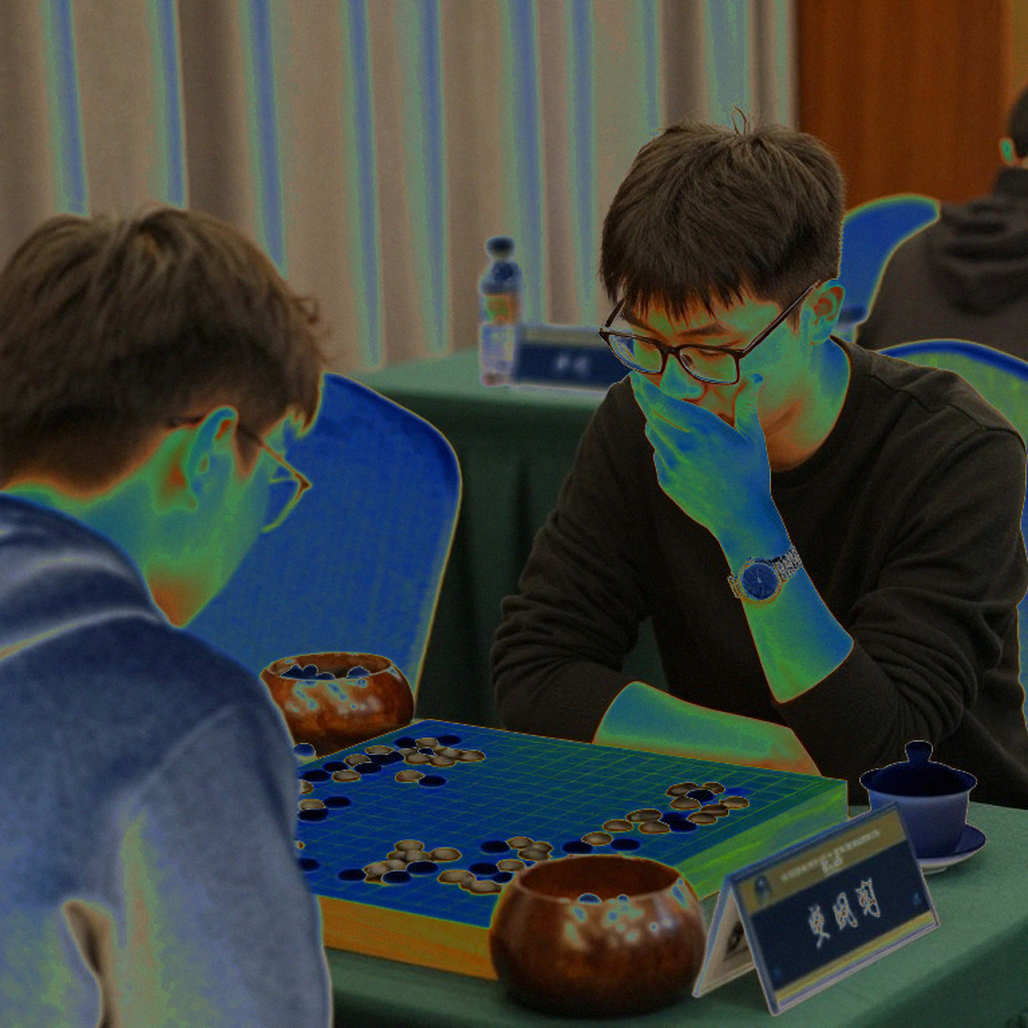
The real battle was elsewhere. Thousands of amateur players have quietly signed an unwritten agreement: skip 2.c4. That move opens a library nobody wants to rent out, the Slav, the Semi-Slav, the Queen's Gambit Accepted, the Orthodox Queen's Gambit Declined. Memorising all of it is a young person's homework; most players sit down after a working day.
London, Colle, Torre, Trompowsky, Catalan, Blackmar-Diemer, Richter-Veresov. The names sound like an inventory list in a cold store, and that is exactly what they are: systems built to be played without heavy memorisation. I call the cost these players avoid the theory tax, paid in hours and in losses on move fifteen of a Slav line they never read. Avoiding that tax is a rational economic decision.
Into that gap stepped a Bulgarian International Master named Valeri Lilov with six instructional videos for Black. The pitch was tidy: one plan per opening. Valeri Lilov did not promise to teach memorisation; he promised to teach players how to stand. For a club audience, that is the right promise in the right place.
The taxonomy of that promotional piece is loose. The Trompowsky (1.d4 Nf6 2.Bg5) and the Torre (1.d4 Nf6 2.Nf3 followed by 3.Bg5) were bundled with the London, yet neither arises after 1.d4 d5. The Catalan runs in the opposite direction entirely, since it contains 2.c4, the very move the customer is trying to avoid. A professional writer would not group them that way. A salesman would.
Examined closely, these systems fall into two families. The London (1.d4, Nf3, Bf4, e3, Bd3, c3) and the Colle (1.d4 d5 2.Nf3 Nf6 3.e3) are blueprints: you build the house first and settle the argument later. The Torre and the Trompowsky are provocation: a bishop to g5 very early, accepting a doubled bishop trade in exchange for tempo. The Blackmar-Diemer (1.d4 d5 2.e4) is the club gambit, and the Richter-Veresov (1.d4 Nf6 2.Nc3 d5 3.Bg5) is a rare and irritating visitor.
What unites them is something else. They do not force Black to remember, they force Black to understand. A player holding Black does not lose because of a missing line, but because of a missing plan for the first fifteen moves. That is the gap every coaching product wants to exploit.
Read the same piece as a technical document, though, and the sample games never arrive. No ACPL figure, no win rate, no database sample. The claim that the Colle, Trompowsky, Torre and London are extremely dangerous is directionally defensible, yet nothing measurable stands behind it.
Six videos cover more than eight opening systems. That arithmetic announces its own intention: breadth traded for depth. One plan per opening is an honest promise for a short format, but it differs fundamentally from a grandmaster's deep repertoire course.
The market underneath is harsher than it looks. Free opening content floods video platforms and chess blogs. To sell anything, a creator must sell curation and branding rather than raw data. The six videos of an International Master sit exactly in the middle tier: above free content, below grandmaster repertoires.
One more thing deserves plain speech. The article labels system players as not very ambitious. That phrasing is careless and self-defeating, because it disparages the exact audience the product targets. In forty-nine years in this trade I have never met a player who chose the London System out of a lack of ambition. I have only met people who weighed the price and decided not to pay it.
The largest problem with that document, however, sits nowhere near the board. The headline names Timur Turlov. Across the entire body of the article, Timur Turlov appears not once. The person named in the headline is absent from the story, while the person actually present, Valeri Lilov, is not named in the headline.
For a documentary screenwriter, that is the gravest error available. A film whose opening scene introduces a character who then vanishes forty minutes later loses its audience at the remote control. Here, readers clicked for Timur Turlov and received a course pitch.
I do not have enough data to assert why that name sits there. Timur Turlov is known in chess circles as a financial figure connected to chess sponsorship, and a sponsor's name on an educational article is not unusual. Any such inference must be verified before use, and in the analysis I read it was ranked at low confidence only.
What I can state with certainty is the structure of the problem. An article with several data points flagged as unsourced, a product described in the vendor's own words, and a headline detached from its content. Together those three produce an information risk far higher than the technical risk of the course itself.
Opening theory is the light part. Play a system badly and you lose half a point. Read an article badly and believe it, and you lose more: you lose the ability to tell analysis from advertising.
Back to the small club on Tran Hung Dao Street. The game ended long ago, the boy packed away his pieces, the old man stayed behind alone at an empty board. The stadium was empty, yet the applause of 2026 still rings inside every old record. The same holds for a chessboard: every abandoned position keeps its question, unanswered by anyone who bothered.
Every chessboard I have walked past holds a secret door, and the entrance is always a person. The door in this story is not the Trompowsky or the Richter-Veresov. It is the name standing in the headline that refused to walk into the article.
A record never grows old; it simply waits for someone who knows how to listen. An opening course is no different: it earns trust only when its author is willing to say clearly who he is, what he teaches, and on what evidence.
What I want to leave behind is not a verdict on the six videos of Valeri Lilov. I want to leave behind a habit: every time a headline names someone, count how often that person appears inside the text. When the answer is zero, the thing worth analysing is no longer the opening.